Documenting and Analyzing the History of Federal Executions
Author: Bill Lofquist
I am a sociologist and death penalty scholar at the State University of New York at Geneseo. I am also a Pittsburgh native. My present research focuses on the history of the death penalty in Allegheny County (Pittsburgh), Pa.
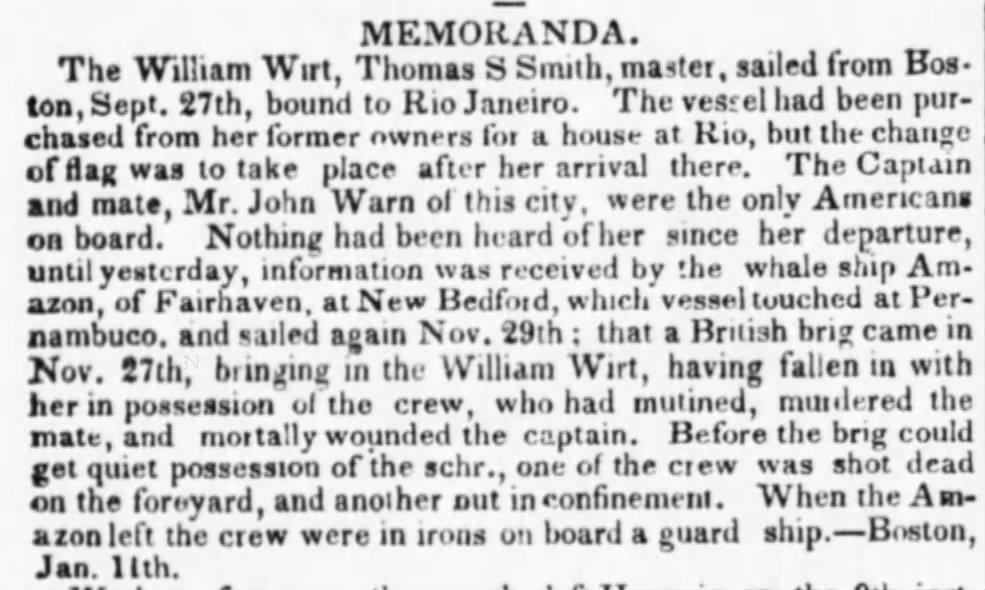
James Moran sailed aboard William Wirt, captained by Thomas S. Smith. While at sea, the nineteen-year old Moran killed Smith.
New York Evening Post, January 14, 1837
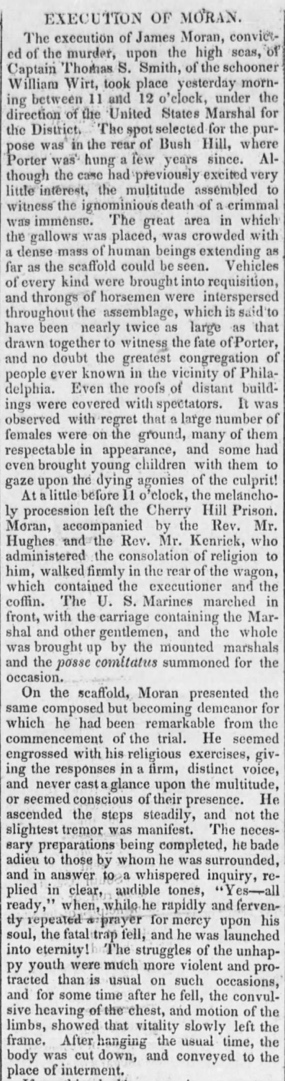
James Moran was hanged before a large and unruly crowd in Philadelphia on May 19, 1837. His was the state’s last public execution and last execution for piracy.
The trading ship Orbit left New York City for Brazil in the summer of 1828. After more than a year in Brazil, the ship and its cargo departed for Africa on January 17, 1830.
After unloading its cargo and taking on a cargo of palm oil, ivory, and precious metals, the Orbit exchanged most of its crew for a new crew of Black sailors that included Joseph Gadett and Thomas Collinet. Gadett, Collinet, and a third sailor quickly realized the value of their cargo and made plans to take over the ship.
While Captain Samuel Woodbury slept, the three mutineers killed him and threw him overboard. The remaining crew were then threatened with death if they did not provide assistance.
While at sea on September 11, 1830, the ship encountered the American brig, Mentor. The two sailors from the Orbit that boarded the Mentor to share information explained that their ship had been seized.
Once in port, the crew of Mentor spread word about the piracy aboard Orbit. Though Orbit was never recovered, Gadett and Collinet were found on the Caribbean island of St. Vincent, where they were arrested. They were returned to Boston via Cuba to stand trial.
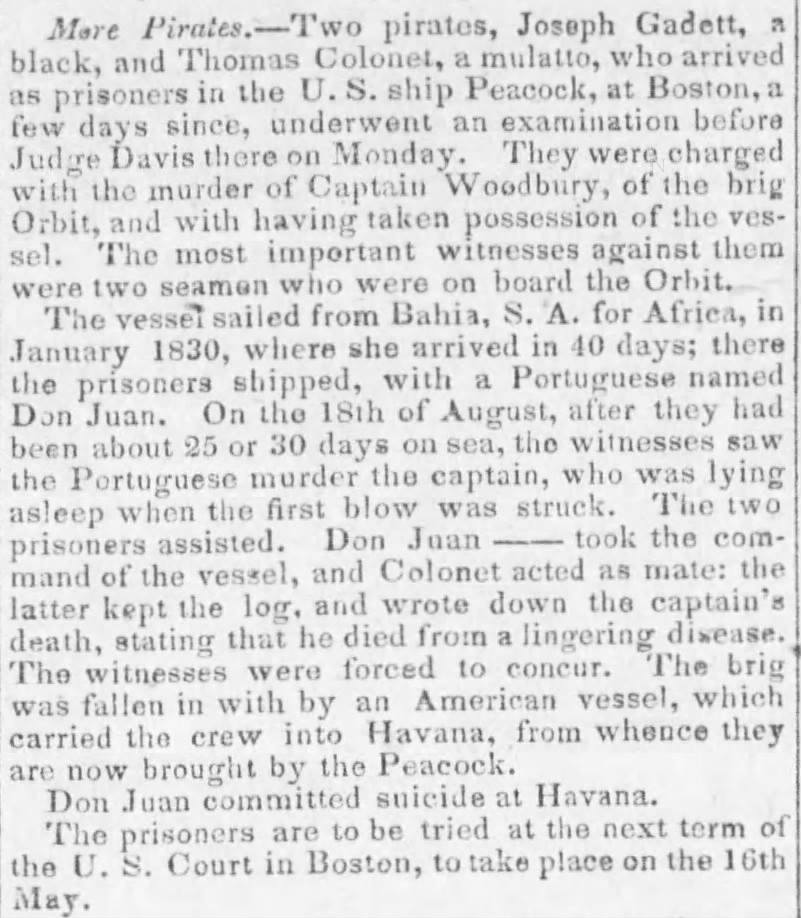
National Gazette (Philadelphia), April 28, 1831
On trial for piracy in federal court, the two men confessed. They were convicted and sentenced to death. Joseph Gadett and Thomas Collinet were hanged together in Boston on July 1, 1831.
Charles Gibbs, born into a seafaring family in Rhode Island, began his career as a privateer as a young man. Working primarily out of the Bahamas, according to his later confessions, he engaged in mutinies and murders across the Caribbean throughout the 1820s.
His murderous career came to an end after he, fellow crewman Thomas J. Wansley, who was Black, and others, mutineed aboard the Vineyard off the coast of Long Island, killing the captain and first mate, on November 23, 1830. While fleeing into harbor, several of the mutineers were killed and much of their stolen cargo of silver was lost.
Gibbs and Wansley survived, only to be captured and sent to New York City to stand trial. Prosecuted by United States Attorneys, James Alexander Hamilton and Philip Hamilton, sons of Andrew Hamilton, Gibbs and Wansley were convicted of murder on the high seas and sentenced to death.
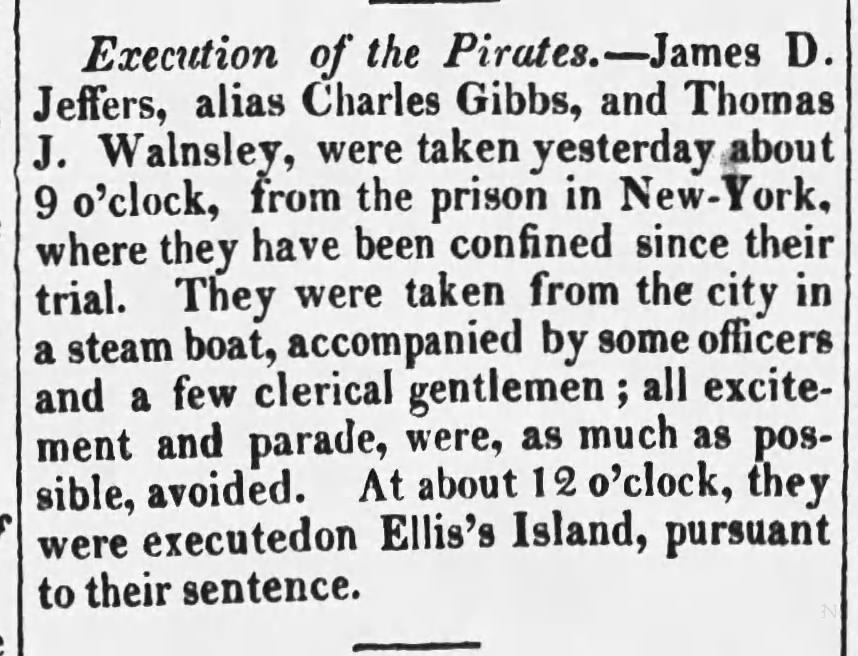
Wyoming Herald (Wilkes-Barre, Pa.), April 29, 1831
Charles Gibbs and Thomas Wansley were hanged together on Ellis Island on April 22, 1831.
The African slave trade continued long after it was formally ended by the Abolition of the Slave Trade Act in 1807.
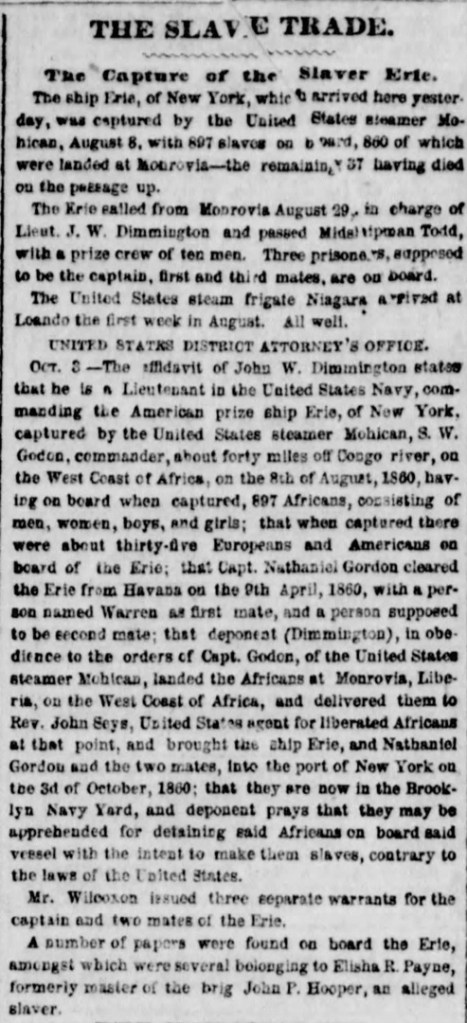
Nathaniel Gordon plied that trade aboard his ship, Erie. On August 7, 1860, Gordon took on 897 enslaved Africans at the Congo River in present-day Angola. His captives were mostly children.
The next day, the Erie was intercepted by the USS Mohican only 50 miles into its voyage. The ship was diverted to Liberia, where the enslaved Africans were freed. Gordon was returned to New York City to stand trial in federal court for violations of the Piracy Act of 1820, which defined participation in the slave trade as piracy subject to the death penalty.
New York Daily Herald, October 4, 1860
After a hung jury in his first trial, Gordon was found guilty on November 9, 1861, and sentenced to death by hanging.
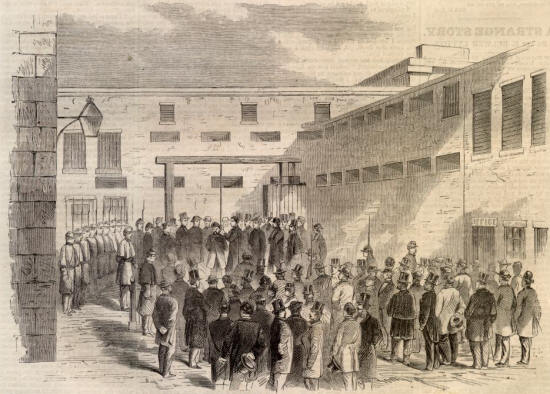
President Abraham Lincoln denied his pardon request. The evening before his scheduled execution, Gordon attempted suicide. Nathaniel Gordon was hanged on February 21, 1862, in the court yard of the Tombs prison.
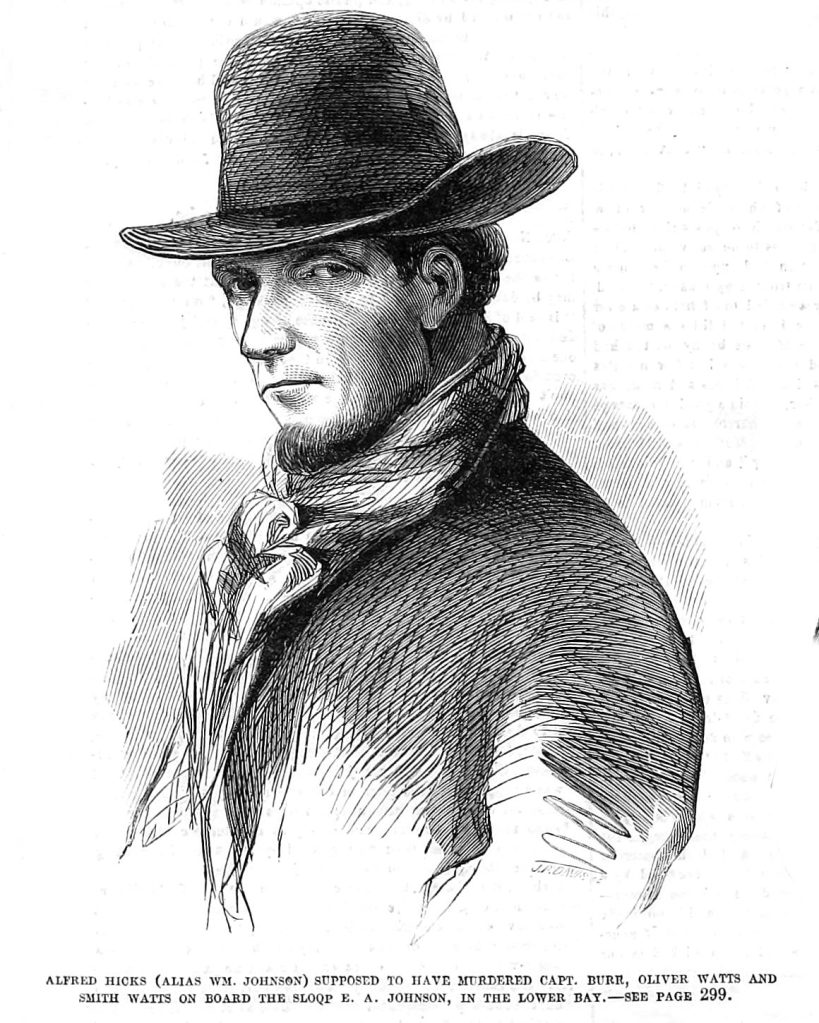
By the time he began working on the New York City-based oyster sloop, A.E. Johnson, Albert Hicks had amassed a long and colorful history of robbery and murder on land and at sea. His biographer suggests he may have killed hundreds of people before his own execution.
The A.E. Johnson transported oysters from Virginia to New York City, a trade that involved large amounts of cash. Hicks was able to secure work as one of four men on the ship.
En route to Virginia in March 1860, Hicks and Smith Watts were on deck while Captain George H. Burr and Watts’ brother, Oliver, were sleeping, Hicks attacked Watts with an axe. When Oliver came to his aid, Hicks killed him. He then attacked Burr and, after a long struggle, killed him. Finding Smith Watts still alive, Hicks attacked him again and threw him overboard.
In the midst of the killing, the unattended ship struck another ship, the J.R. Mather. To avoid detection, Hicks quickly scuttled the A.E. Johnson and rowed a small boat to Staten Island.
When the Coast Guard found the A.E. Johnson, the murdered sailers were discovered and police were able to trace Hicks to Providence, Rhode Island, where he was arrested.
At trial in May 1860, the evidence against Hicks was overwhelming and he was quickly convicted and sentenced to death. He subsequently provided a full confession.
Alfred H. Hicks was hanged on July 13, 1860, on Bedloe’s Island, the present-day location of the Statue of Liberty. His was the last public execution in New York City. Ten thousand people are estimated to have watched the event. The New York Times devoted more than half of its front page to coverage of the execution.
Benson, Douglas, and James Clements were among the crew of the Glen, a large cargo ship that operated between Maine and San Francisco, sailing around the tip of South America.
After delivering a cargo of lumber to San Francisco in 1849, the ship returned with a cargo of copper picked up in Chile; departing there on August 29, 1850. While still off the South American coast during the early morning of September 17, the Glen’s second mate, Asa Havens, was shot and killed.
The killers – Benson, Douglass, and Clements – then confronted Captain Small with their plan to take over the ship. Small was able to escape and, with the aid of other sailers, was able to capture the mutineers. Small then sailed into Valparaiso, Chile, and turned over the captured men.
New York Evening Post, June 2, 1851
The prisoners were returned to New York for trial for the murder of Asa Havens on the high seas. Convicted in the Circuit Court for the Southern District of New York, Edward F. Douglass and Thomas Benson were hanged in New York on July, 25, 1851.
Brooklyn Daily Eagle, July 25, 1851
James S. Clements, convicted at the same time and for the same offense, was pardoned.
Warrington, Holmes, and Rosewain were crew aboard an Argentine-flagged privateer that captured a merchant ship transporting valuable cargo. Once captured, the three men were among those charged with sailing the captured ship back to Argentina.
The three men had other plans. Aboard ship on July 4, 1818, Warrington, Holmes, and Rosewain killed the other sailors on the seized ship, discharged the prisoners on land, and set sail for Baltimore, where they planned to sell the cargo.
However, they overshot their destination and sailed instead to Scituate, Massachusetts, where they were arrested.
New York Evening Post, January 8, 1819
They were convicted of piratical and felonious homicide on the high seas by the Circuit Court of Massachusetts in 1818 and sentenced to death. Their conviction was upheld by the U.S. Supreme Court.
In the opening paragraph of its opinion, the Supreme Court clearly articulated the basis on which this and all other cases of piracy were treated as federal capital cases: “The courts of the United States have jurisdiction under the Act of 30 April, 1790, c. 36, of murder or robbery committed on the high seas, although not committed on board a vessel belonging to citizens of the United States, as if she had no national character, but was held by pirates or persons not lawfully sailing under the flag of any foreign nation.“
Warrington, Holmes, and Rosewain were hanged in Boston on June 15, 1820.
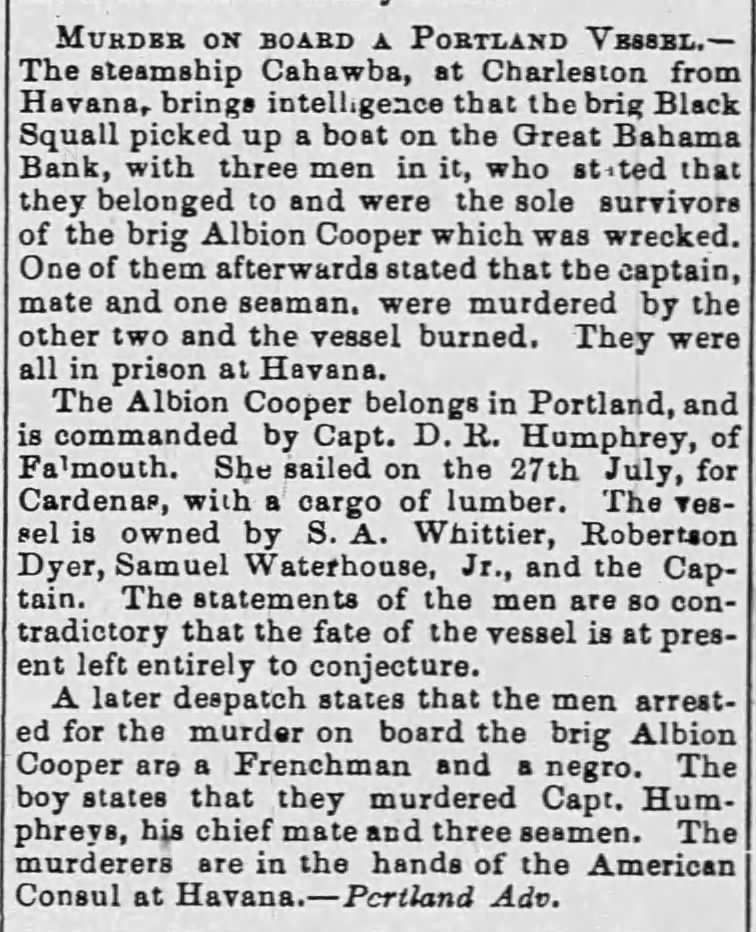
The Albion Cooperwas a Maine-based brig with a crew of eight men sailing near Cuba in September 1857 when Abram Cox and Peter Williams mutinied.
Williams had been disciplined aboard ship for fighting with the first mate. As retaliation, he convinced Cox to join him in a plan to kill everyone else aboard the ship. Once the rampage began, another crewman, Thomas Fahey, agreed to join them. The three men killed the five others and threw them overboard.
Finding themselves unable to sail the ship they now controlled, the three men plundered the ship, set it ablaze, and boarded a life boat. Picked up after a few days at sea, the men confessed.
Bangor Daily Whig and Courier, September 19, 1857
Returned to Maine to stand trial, Cox and Williams were sentenced to death for murder on the high seas. They were hanged in the prison yard in Auburn, Maine, before a crowd in excess of five thousand on August 27, 1858.
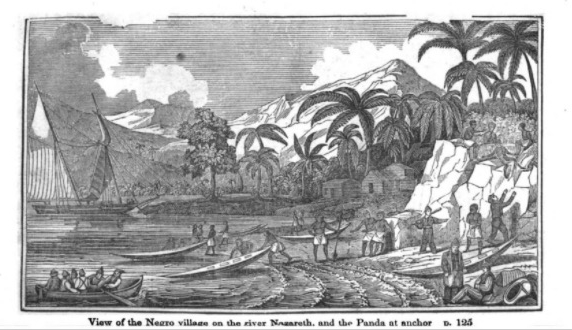
Pedro Gilbert was the captain of the piratical Spanish schooner Panda, sailing out of Havana, Cuba in September 1832. Off the coast of Florida, Panda waylaid the Massachusetts-based brig, Mexican, boarded the ship, stole more than $20,000 in silver, and set the ship ablaze.
After Panda sailed off, the crew of the Mexican was able to extinguish the fire, sail in to port, and report what had happened to authorities.
The Panda, which was usually employed in transporting slaves, was later found off the coast of Africa, where a British ship captured its crew and sank the ship.
Extradited to Salem, Massachusetts in August 1834 to stand trial, the twelve men were charged with piracy in federal court in November. At trial in December 1834, five of the more junior men were acquitted after being found to have been following orders and seven other men were convicted and sentenced to death.
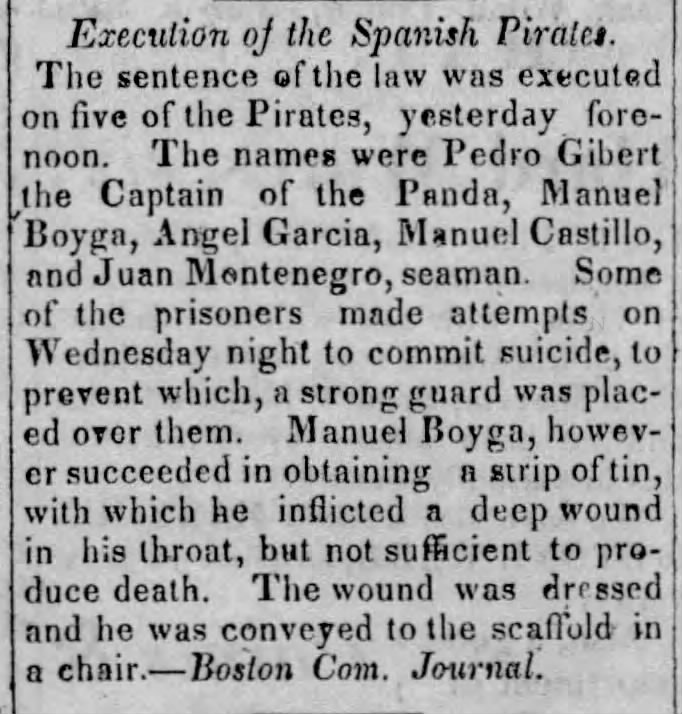
On the gallows on June 11, 1835, Manuel Boyga slit his own throat as he awaited execution. He was hanged anyway, though he may already have been dead. Gilbert, Castillo, Garcia, and Montenegro were also hanged.
North Star (Danville, Vermont), June 22, 1835
Francisco Ruiz, who had also been sentenced to death, was not hanged after an initial determination that he was insane. After determining that he was feigning insanity, Ruiz was hanged three months later, on September 12, 1835.
Bernard DeSoto, the owner and first mate of the Panda, had also been sentenced to death. However, his clemency pleadings, assisted by his attractive wife, succeeded in gaining his pardon from President Andrew Jackson.
This is one of only a handful of cases in which federal executions were conducted for crimes that did not include murder.
Daniel Lee followed a familiar path into crime. Raised in a neglectful and violent home, Lee was arrested for his part in the July 24, 1990, robbery and murder of Joseph Wavra III in Oklahoma City. Sentenced to five years in prison, Lee was recruited in to the violent white supremacist Aryan People’s Resistance in 1995.
On January 11, 1996, Lee and Chevie Kehoe raided the Arkansas home of gun dealer William Frederick Mueller. They killed Mueller, his wife, Nancy, and her 8-year old daughter, Sarah Elizabeth Powell, and stole tens of thousands of dollars of cash and guns.
Though Kehoe was convicted and sentenced to life imprisonment and the presiding U.S Attorney favored the pursuit of similar charges against Lee, the Clinton administration pressed for capital charges. Daniel Lewis Lee was convicted of violations of the federal Racketeer Influenced and Corrupt Organizations (RICO) statute and three murders in aid of racketeering and was sentenced to death on May 4, 1999.
After numerous unsuccessful appeals, Lee was among the federal death row inmates selected by Attorney General William Barr to face execution. He was executed by lethal injection at the federal prison in Terre Haute, Indiana, on July 13, 2020.



 The Federal Death Penalty Project