Documenting and Analyzing the History of Federal Executions
Author: Bill Lofquist
I am a sociologist and death penalty scholar at the State University of New York at Geneseo. I am also a Pittsburgh native. My present research focuses on the history of the death penalty in Allegheny County (Pittsburgh), Pa.
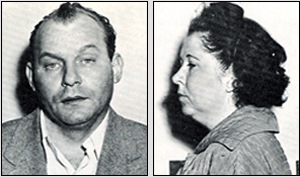
FBI agents were waiting for Gerhard Puff, a German-born bank robber who had earned a place on the FBI’s Ten Most Wanted List, when he arrived at Manhattan’s Congress Hotel on July 25, 1952. In an effort to avoid arrest, Puff shot and killed Special Agent Joseph John Brock and fled the hotel.
New York Daily News, July 16, 1952
The shooting continued on the street. Puff was shot, allowing officers to apprehend him.
Fort Worth Star Telegram, July 27, 1952
At trial in the US District Court for the Southern District of New York, Puff was found guilty of first-degree murder on May 15, 1953, and sentenced to death. After his appeal was rejected, he was executed in the electric chair at Sing Sing on August 12, 1954.
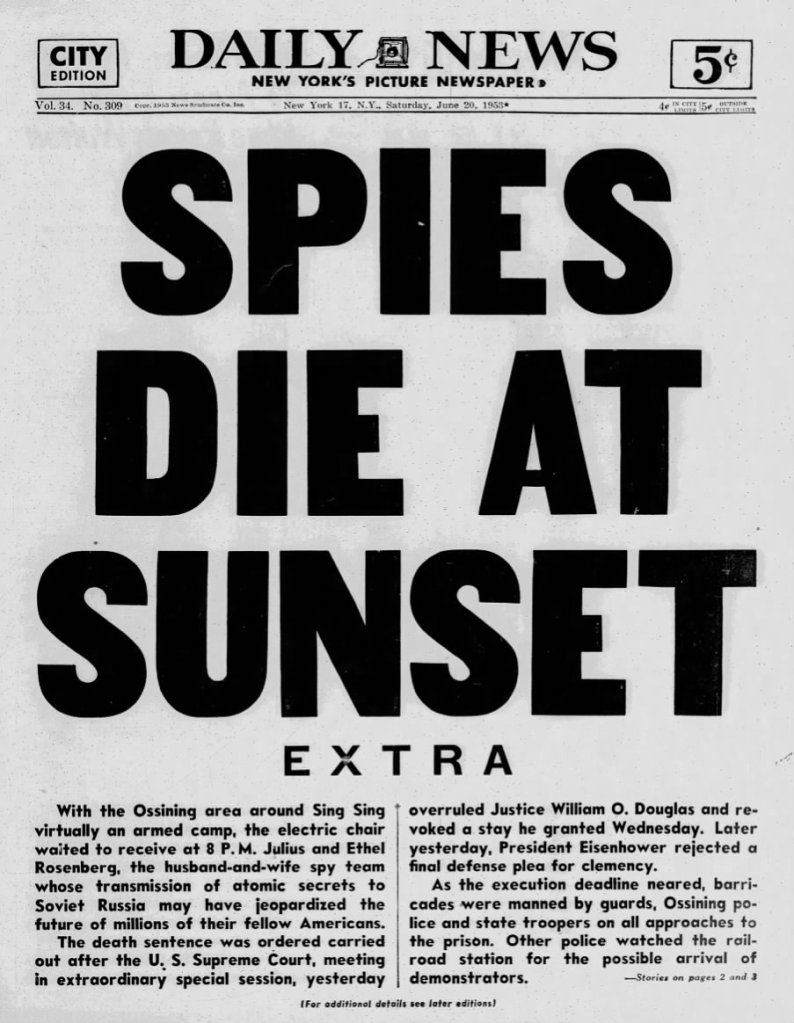
In one of the most discussed capital cases in American history and the only federal capital espionage case in American history, Julius and Ethel Rosenberg were convicted in 1951 of sharing top secret military information with the Soviet Union. They were executed in the electric chair at Sing Sing on June 19, 1953.
New York Daily News, June 20, 1953
Julius and Ethel were the children of Jewish immigrant parents who grew up in New York City. As youth, both were attracted to the Young Communist League, where they met in 1936. Julius worked in the Army Signal Corps Engineering Laboratory during World War II. In that position, he shared military secrets with the Soviets and recruited others to do the same. Among those he recruited was David Greenglass, Ethel’s brother, who was working on the top-secret Manhattan Project at Los Alamos National Laboratory.
The Rosenbergs were arrested in 1950 when a ring of Soviet spies began to unravel. Greenglass, who was also arrested, confessed and implicated others, including the Rosenbergs.
Ethel and Julius Rosenberg, 1950
At trial in the US District Court for the Southern District of New York, the Rosenberg’s were convicted of espionage on March 29, 1951, and sentenced to death on April 5.
An international clemency campaign followed, claiming the Rosenbergs were innocent or at least overcharged and that they were the victims of antisemitism and anticommunism. Though many prominent and powerful individuals and organizations were attracted to their cause, their appeals and clemency requests were unsuccessful.
The decades long effort to argue that the Rosenbergs were innocent and that their case was an episode of Cold War paranoia was countered by documents released after the fall of the Soviet Union.
Nearly 160 years after Thomas Bird became the first person executed by the federal government for murder on the high seas, David Watson became the last person executed for that crime.
Aboard the USS Stribling, a Navy vessel in Key West, Florida, Watson killed fellow sailor Benjamin Leroy Hobbs after Hobbs resisted his sexual advances. The killing occurred on July 25, 1946. Watson was arrested two days later. He confessed two weeks later.
Miami News, July 26, 1946
Watson was convicted of first-degree murder in the Southern District of Florida on October 4, 1946, and sentenced to death. That conviction was overturned on appeal due to an error in the jury instructions.
At retrial, Watson was convicted of first-degree murder on August 7, 1947, and sentenced to death a second time. His appeal was unsuccessful and his clemency request was rejected.
David Watson was executed in the electric chair at Union Correctional Institution in Raiford, Florida, on September 15, 1948.
Clyde Arwood was a moonshiner, plying his trade in the woods of Hale’s Point, Tennessee. William M. Pugh, James Howes, and Clarence Rossner were Internal Revenue Service agents who, on November 5, 1941, responded to a complaint filed against Arwood.
After several trips to locate and surveil the carefully hidden distillery, the agents, unbeknownst to Arwood, destroyed the still on November 20. They then went to Arwood’s home to arrest him, but he was not there.
Returning the following day, the officers spoke with Arwood. After extended conversation and without any signs of impending trouble, Arwood shot and killed Pugh. The other agents fled.
Chattanooga Daily Times, November 22, 1941
Arwood was tried in the District Court of the United States for the Western District of Tennessee. His conviction was upheld on appeal.
Clyde Arwood was executed in the electric chair at Tennessee State Prison in Nashville on August 14, 1943.
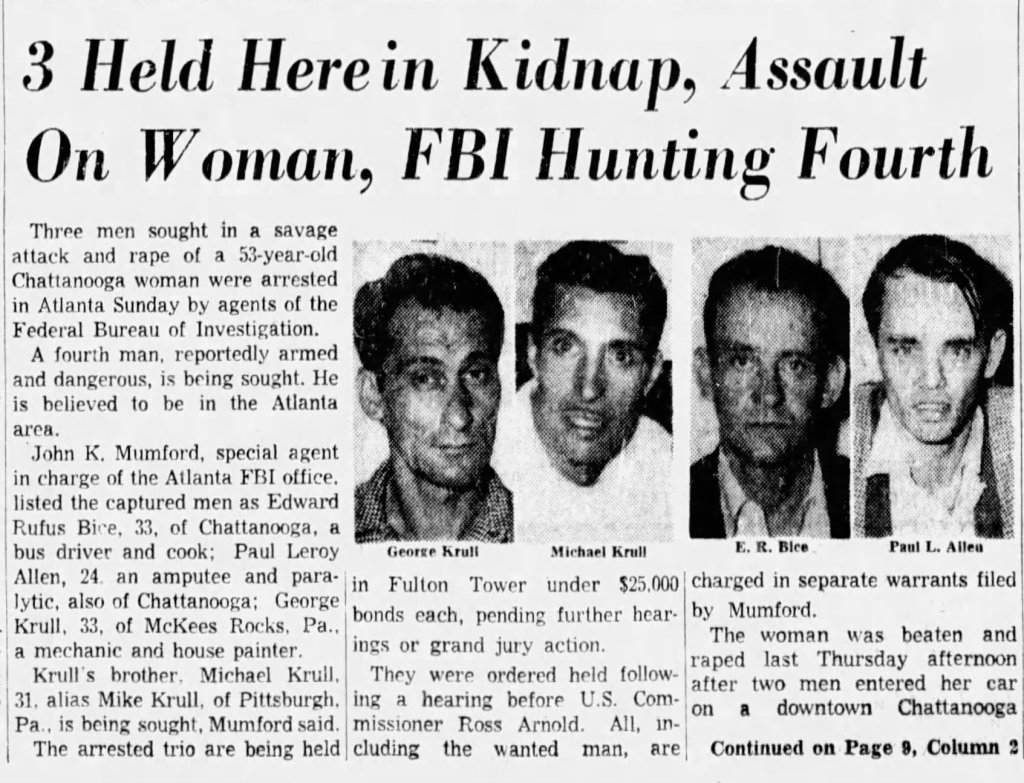
On April 14, 1955, brothers George and Michael Krull and their friends, Edward Bice and Paul Allen, were drinking and cruising around Chattanooga, Tennessee. The Krull brothers, who were born and raised in McKees Rocks, Pennsylvania, had fled south to escape arrest.
Noticing a woman stepping out of a parked car, the brothers forced her back in and robbed her. Though the woman, Sunie Jones, 53, did not have any money, she told the brothers she knew someone who would give her money. The three drove off together, crossing into Georgia.
The Krulls drove in to North Georgia’s Chickamauga Park, site of a bloody Civil War battle in 1863. Bice and Allen followed them. In the park, Michael and George Krull raped Jones. When a park ranger came toward them, the Krulls ran to Bice and Allen’s car and the four drove off.
Atlanta Constitution, April 18, 1955
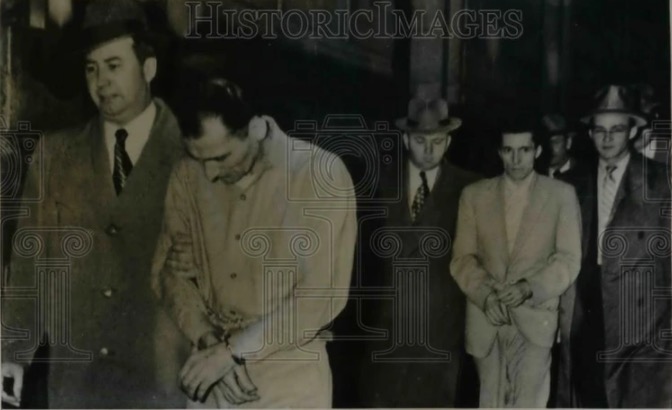
Bice, Allen, and George Krull were quickly arrested. Michael Krull fled and was later arrested in New York.
The Krull brothers were tried in Atlanta on federal charges of kidnapping Jones, transporting her across state lines, and raping her. With Jones as a witness, the Krulls were quickly convicted and sentenced to death.
After their appeal and clemency requests were denied, George and Michael Krull were electrocuted at Reidsville State Prison on August 21, 1957.
On September 28, 1953, Bonnie Heady and Carl Hall kidnapped Robert “Bobby” Greenlease, Jr., the six-year old son of millionaire Kansas City car dealer Robert Greenlease. The kidnapping occurred when Heady, posing as Bobby’s aunt, picked him up from school.
Kansas City Times, January 6, 1953
They demanded and received a ransom of $600,000, a record amount at that date. By that time, however, young Bobby had already been killed on a farm just across the state line in Kansas.
Kansas City Times, September 29, 1953
With no clues as to their identities or whereabouts, Heady and Hall moved to St. Louis. However, their lavish spending drew attention and they were soon linked to the kidnapping. They were arrested in St. Louis on October 6. Bobby’s body was recovered the next day.
Heady and Hall were tried in federal court in Kansas City and were convicted and sentenced to death on November 19, 1953. They were executed in the gas chamber at Missouri State Prison in Jefferson City a month later, on December 18, 1953.
Sam Shockley and Miran Thompson had the type of criminal pasts that led to their imprisonment at the notorious and reputedly escape-proof Alcatraz Federal Prison in San Francisco Bay.
Thompson was serving life plus 99 years for kidnapping and murder. He had escaped from confinement eight times before being sent to Alcatraz. Shockley was serving a life sentence for robbery and kidnapping.
Those same pasts apparently led them to believe that they could do what had not been done before: escape from Alcatraz. That effort began on May 2, 1946, with a prison uprising intended, ultimately, to allow a group of inmates to commandeer the prison ferry.
The escape attempt began well, with the prisoners gaining access to weapons and keys. Their efforts were slowed by the lack of a key that would allow them to get to the ferry. The delay allowed guards to sound the alarm.
Unable to escape the island, the inmates instead engaged in futile violence. As the Battle of Alcatraz began, federal forces mobilized to retake control of the prison.
Santa Rosa Press Democrat, May 3, 1946
Sam Shockley, Miran Thompson, and Clarence Carnes survived the siege and were tried on federal charges for the killings of two guards. Carnes was sentenced to life imprisonment. Shockley and Thompson were sentenced to death.
They were executed in the gas chamber at San Quentin on December 3, 1948.
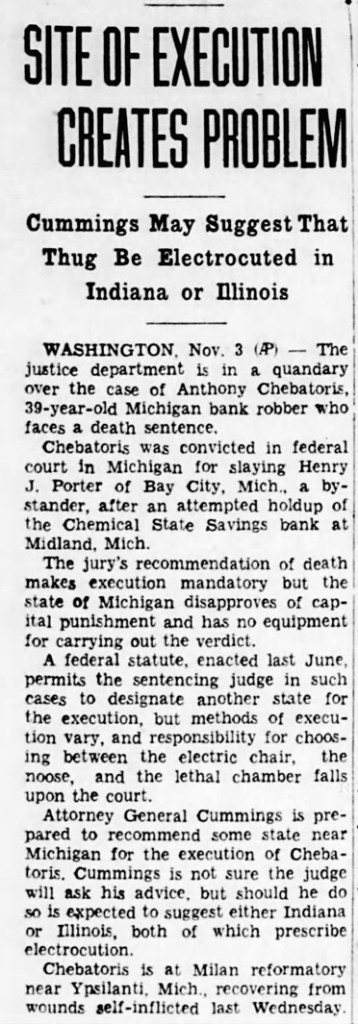
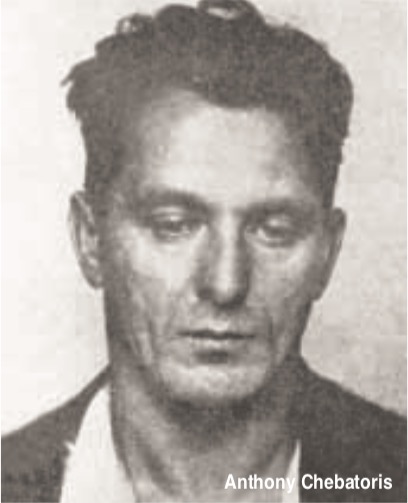
On September 29, 1937, Anthony Chebatoris and Jack Gracey, who had met in the Michigan State Prison, attempted to rob the Chemical State Savings Bank in Midland, Michigan. The robbery went badly, resulting in the killing of Henry Porter, a bystander, and Gracey.
Chebatoris was arrested at the scene.
Though Chebatoris had not crossed state lines and though Michigan had abolished the death penalty in 1846, Chebatoris was tried, convicted, and sentenced to death under the recently-enacted Federal Bank Robbery Act of 1934. In an era of numerous high profile bank robberies, that statute applied federal jurisdiction to banks as federally-insured institutions.
It was the first death sentence imposed in Michigan since statehood more than a century earlier.
Lansing State Journal, November 3, 1937
Chebatoris attempted suicide soon after being convicted.
After President Roosevelt refused Michigan Governor Frank Murphy’s request to commute the sentence or move the execution out of respect for Michigan’s death penalty abolitionism, Anthony Chebatoris was hanged at the Federal Detention Farm near Milan, Michigan, on July 8, 1938.
Until 2020, Chebatoris was the only person in American history to have been executed by the federal government for a crime committed in a state that did not permit the death penalty.
Glen Applegate and Robert Suhay met in prison in New York while serving robbery sentences. After release in 1936, the two men robbed a bank in Katonah, New York on March 12, 1937.
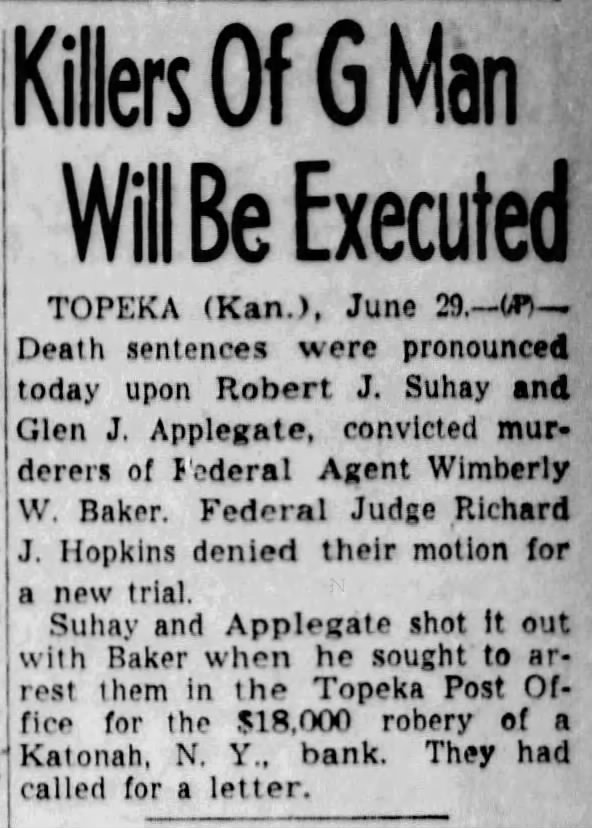
Tracked to Topeka, Kansas, FBI Agent Wimberly Wayne Baker was staking out the local post office on April 16, 1937, when the two men entered. As Baker tried to apprehend them, the two men opened fire. Baker was killed. Applegate and Suhay were arrested later that day in Plattsmouth, Nebraska.
Sacramento Bee, June 29, 1937
Applegate and Suhay were convicted and sentenced to death. After their conviction was affirmed in Suhay v. United States, they were hanged at Leavenworth Federal Penitentiary on August 12, 1938.
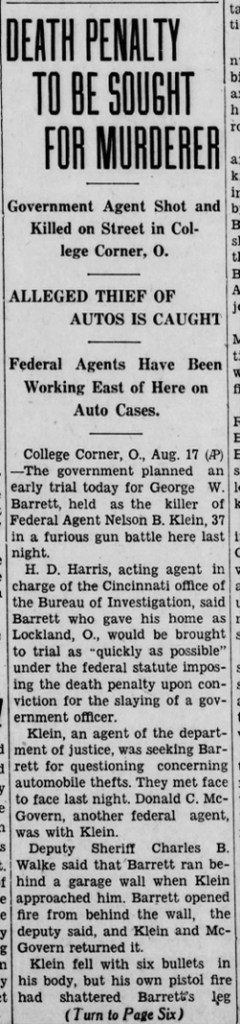
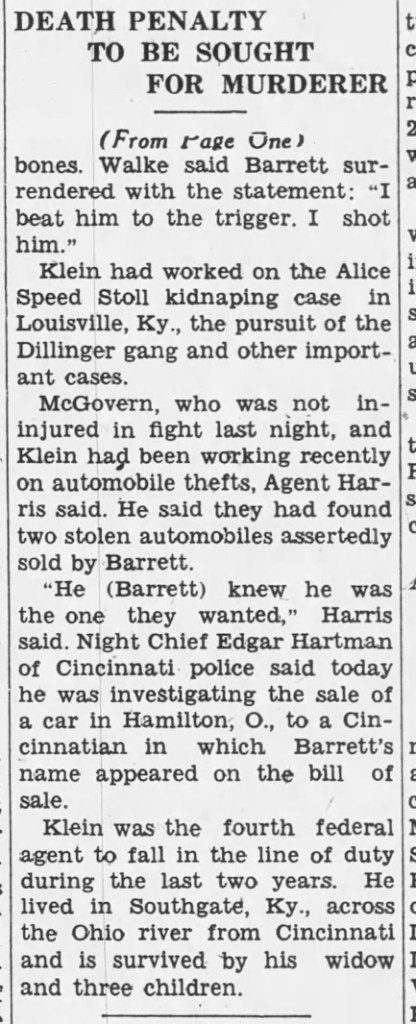
George W. Barrett had a long criminal history, including having killed his mother and shot his sister. That career culminated on August 16, 1935, when two Federal Bureau of Investigation (FBI) agents investigating a series of car thefts tracked him to College Corner, Ohio, very near the Indiana border. The effort to apprehend him led to a shoot out in which agent Nelson B. Klein was shot and killed and agent Donald McGovern was wounded.
Rushville Republican, August 17, 1935
Barrett was convicted of first-degree murder on December 7, 1935. He was hanged on March 24, 1936.
In an era in which federal criminal law was expanding rapidly, Barrett was the first person sentenced to death under a new federal statute that made it a capital offense to kill a federal agent.







 The Federal Death Penalty Project